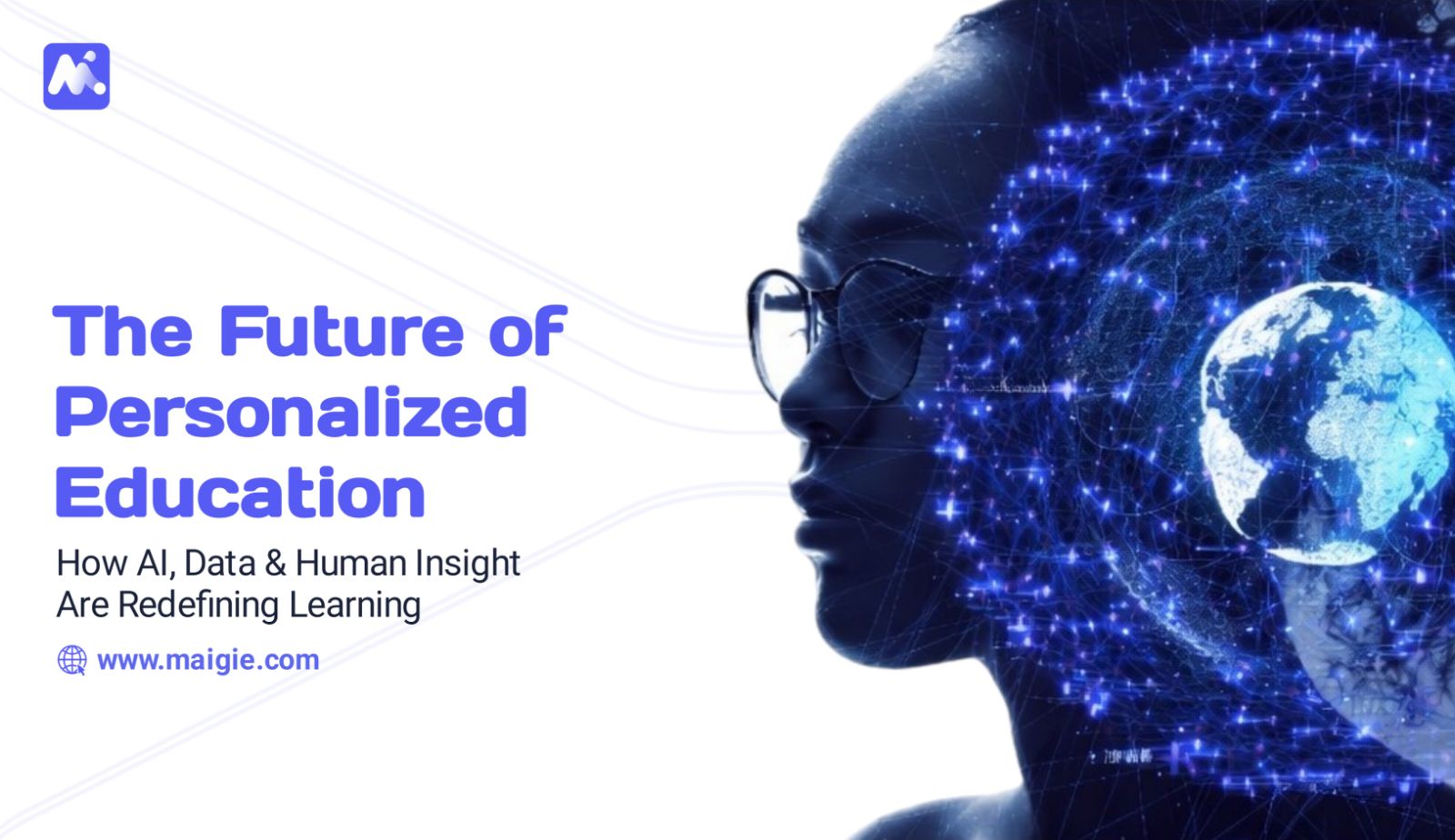
The Future of Personalized Education: How AI Is Making Learning Fit Everyone
Maigie Team
Learning Science
The idea of personalized education is not new. Teachers have always known that students learn differently. But for most of history, the tools to deliver truly individualized learning at scale simply didn't exist.
That's changing fast.
AI, adaptive algorithms, and connected platforms are making personalized education accessible to everyone, not just students at elite institutions with small class sizes. The question isn't whether personalized learning will become the standard. It's how quickly, and who benefits most.
What Is Personalized Education, Really?
Personalized education means adapting what you learn, how you learn it, and when you learn it, based on your individual needs, goals, and pace.
It is not the same as self-paced learning (just watching videos at your own speed). True personalization is dynamic: the system adapts to you as you learn.
| Traditional Education | Personalized Education |
|---|---|
| Same content for everyone | Content adapts to your level |
| Fixed pace (semester/quarter) | You move at your own pace |
| One teaching style | Multiple modalities: text, video, voice, quizzes |
| Assessment at the end | Continuous assessment and feedback |
| Teacher broadcasts to 30+ students | AI provides 1-on-1 guidance |
| Fixed schedule | Flexible, goal-driven scheduling |
The shift from broadcasting to personalizing is the most significant change in education since the printing press made books accessible.
Why Now? The Three Forces Driving Personalized Learning
1. AI That Understands You
Modern AI models can do more than answer questions. They can:
- Assess your knowledge level: figuring out what you already know and what gaps exist
- Adapt explanations: shifting from technical to simple language based on your responses
- Generate practice: creating quizzes, scenarios, and exercises tailored to your weak areas
- Remember your history: building a persistent profile of your learning patterns
This isn't futuristic, it's happening now. Platforms like Maigie use AI to generate entire courses from a topic prompt, schedule your study sessions, and quiz you at the right intervals using spaced repetition.
2. Data-Driven Learning Science
Decades of research in cognitive science have identified what actually works:
- Spaced repetition: reviewing material at increasing intervals boosts long-term retention by 200-400%
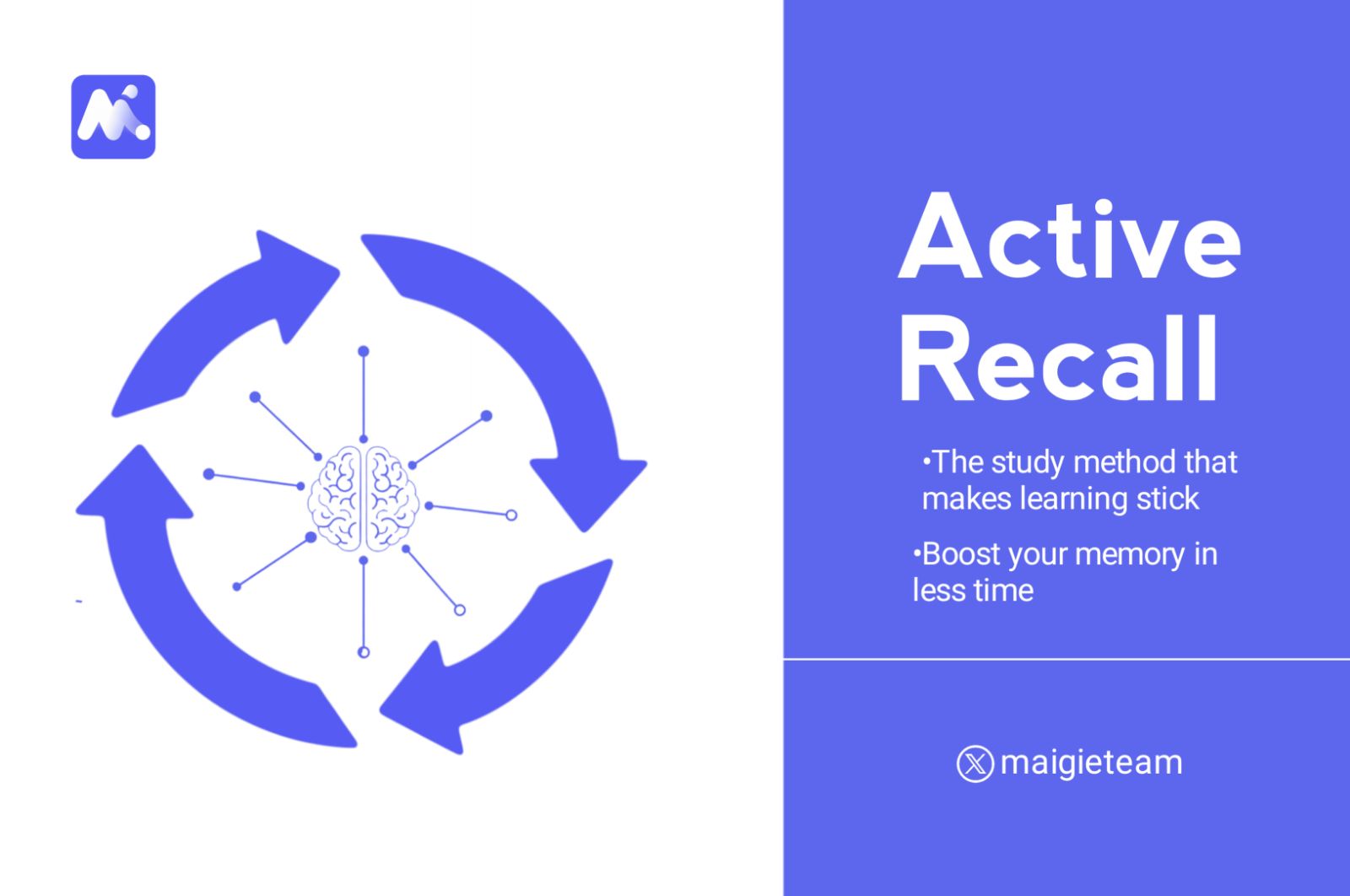
- Active recall: testing yourself is more effective than re-reading
- Interleaving: mixing topics during study sessions improves transfer learning
- Metacognition: reflecting on how you learn improves what you learn
The problem was always implementation. A single teacher can't design a spaced repetition schedule for 30 students across 5 subjects. AI can, for millions of learners simultaneously.
3. Access to Technology
The barrier to entry has collapsed:
- Smartphones are effectively universal among students globally
- Cloud computing makes powerful AI available through a browser
- Open-source models are driving costs down
- Connectivity reaches more communities every year
Personalized education is no longer a privilege. The infrastructure exists to deliver it to anyone with an internet connection.
The Five Pillars of Personalized Education
1. Adaptive Content Delivery
The system adjusts what it teaches based on what you know.
How it works:
- Pre-assessments identify existing knowledge
- Knowledge graphs map dependencies between concepts
- The system skips what you know and reinforces what you don't
- Difficulty adjusts in real-time based on performance
Impact: Students spend time learning what they need to learn, not what they already know. Studies show adaptive systems can reduce time to mastery by 30-50%.
2. Intelligent Scheduling
The system decides when you should study what.
How it works:
- Spaced repetition algorithms calculate optimal review intervals
- AI balances new material with review sessions
- Schedules adapt to your goals, deadlines, and available time
- Energy and focus patterns are factored in
Impact: No more cramming. Consistent, optimized study sessions replace last-minute panic.
3. Multi-Modal Learning
The system offers content in the format that works best for you.
How it works:
- Text summaries, videos, interactive exercises, voice explanations, and quizzes
- The system tracks which modalities produce the best retention for each student
- Students can switch modes mid-session (reading at a desk, voice review on a walk)
Impact: Learning fits into your life instead of forcing your life around a rigid format.
4. Continuous Assessment
The system measures understanding constantly, not just at exam time.
How it works:
- Micro-quizzes after every concept
- AI-generated practice problems
- Confidence tracking (how sure are you of your answer?)
- Error pattern analysis (identifies recurring misconceptions)
Impact: Problems are caught and corrected immediately, not six weeks later on a midterm.
5. Goal-Aligned Learning Paths
The system connects what you learn to why you're learning it.
How it works:
- Students set goals (pass the CPA exam, learn Python, prepare for medical boards)
- AI generates a course structure aligned to the goal
- Progress tracking shows how each study session moves you closer
- Milestones and achievements maintain motivation
Impact: Learning feels purposeful. Students who connect study to goals show significantly higher completion rates.
Who Benefits Most?
Personalized education helps everyone, but it's transformative for groups that traditional education underserves:
Self-Taught Learners
No teacher, no classroom, no problem. AI provides the structure, feedback, and accountability that self-learners typically lack.
Career Changers
Adults switching fields need to learn fast and target specific skills. Personalized paths cut out the irrelevant coursework and focus on what matters for their new career.
Students in Under-Resourced Schools
A school with 50 students per classroom can't provide individual attention. AI tutoring can, for every student, 24/7.
Neurodivergent Learners
Students with ADHD, dyslexia, or other learning differences benefit enormously from adaptive pacing, multi-modal content, and flexible scheduling.
Lifelong Learners
Professionals who need to continuously upskill benefit from targeted, efficient learning that respects their limited time.
Challenges and Honest Limitations
Personalized education is powerful, but it's not a silver bullet. Here are the real challenges:
1. The Cold Start Problem
AI needs data to personalize. New students start with generic recommendations until the system learns their patterns. This can take 1-2 weeks of consistent use.
2. Over-Reliance on AI
There's a real risk of students becoming passive consumers, letting AI explain everything without struggling through the material themselves. Productive struggle is essential for deep learning.
The fix: Good platforms require active participation (answering questions, generating responses) rather than passive consumption.
3. Quality of AI-Generated Content
AI can generate content fast, but not all of it is accurate. Hallucinations, oversimplifications, and factual errors remain a concern, especially in specialized fields.
The fix: Human review, source citations, and feedback loops where students can flag errors.
4. Privacy and Data Ethics
Personalization requires data: learning patterns, performance, goals, even time-of-day preferences. How this data is stored, used, and protected matters enormously.
What to look for: Platforms with clear privacy policies, data encryption, and no third-party data selling.
Summary
Personalized education is no longer a theoretical ideal. The technology exists today to give every learner a customized path, adapting content, timing, format, and difficulty to individual needs.
The biggest shift is this: education is moving from "one teacher broadcasts to many students" to "one AI tutor adapts to each student."
| What's Changing | From | To |
|---|---|---|
| Content | Fixed syllabus | Adaptive, AI-generated |
| Pace | Semester-locked | Self-paced with smart scheduling |
| Assessment | End-of-term exams | Continuous micro-assessment |
| Format | Lecture-only | Text, video, voice, interactive |
| Feedback | Delayed grades | Real-time AI feedback |
| Access | Privileged few | Anyone with internet |
The students who embrace personalized learning tools today will have a compounding advantage not just in what they know, but in how efficiently they learn.
The future of education isn't one-size-fits-all. It fits you.
Ready to try it? Create a free account on Maigie and experience AI-powered personalized learning: structured courses, smart scheduling and spaced repetition, with live voice study available on Maigie Plus.